Why I Left the Courtroom Before AI Did It For Me
Microsoft ranks 40 jobs exposed to AI. Lawyers dodged the list, but legal work is next. Discover how to stay ahead before your competitors do.
Adam Bair
1/21/20265 min read
Why I Left the Courtroom Before AI Did It For Me
Microsoft just dropped a list that has white-collar workers across the country quietly updating their LinkedIn profiles.
Their researchers analyzed 200,000 real-world AI conversations and identified the 40 jobs with the highest "AI applicability," meaning the roles where AI can already handle most of the core tasks. Translators topped the list. Historians came in second. Writers, customer service reps, and sales professionals rounded out the top five.
Here's what caught my attention: the jobs getting hit hardest aren't low-skill positions. They're knowledge workers. People with degrees. People in offices doing research, writing, and explaining complex information to others.
Sound familiar?
The Legal Profession Dodged the Top 40, But Don't Get Comfortable
Lawyers didn't make Microsoft's most-exposed list. Neither did paralegals or legal secretaries. That might feel like good news.
It's not.
The research focused specifically on generative AI's current capabilities. The authors themselves acknowledged their findings don't capture what's coming next: "Our measurement is purely about LLMs: other applications of AI could certainly affect occupations involving operating and monitoring machinery, such as truck driving."
In other words, this is wave one. Legal research, document review, brief writing, contract analysis... these tasks are squarely in AI's wheelhouse. The technology just hasn't been deployed at scale in law firms yet.
But it will be.
Three Types of Lawyers in the AI Era
After 17 years practicing law, I've noticed legal professionals are falling into three camps right now:
The Deniers still believe that because legal work requires judgment, AI can't touch it. They're waiting for the technology to hit a wall. (Spoiler: it won't.)
The Anxious know AI is coming but don't know what to do about it. They're reading articles like this one, feeling increasingly worried, and hoping their firm's management figures it out.
The Adapters have already started learning how to use AI as leverage. They're not waiting for permission. They're experimenting with tools, understanding the limitations, and building workflows that make them faster and more valuable.
I was in the third camp. That's why I built The Blackletter Protocol.
The Microsoft Research Nobody's Talking About
Here's the part of the Microsoft study that should terrify every lawyer still using Westlaw the same way they did in 2015:
"In terms of education requirements, we find higher AI applicability for occupations requiring a Bachelor's degree than occupations with lower requirements."
Translation: Your degree isn't protecting you. In fact, it might be making you more vulnerable.
The jobs AI can handle best are the ones that involve processing information, synthesizing complex ideas, and producing written work product. That's literally what lawyers do for 70% of their billable hours.
The researchers found that having a four-year degree, once considered a safeguard against automation, is now a predictor of AI exposure.
What Jensen Huang Gets Right
Nvidia's CEO said something at the Milken Conference that every lawyer should tape to their monitor:
"You're not going to lose your job to an AI, but you're going to lose your job to someone who uses AI."
This isn't about AI replacing lawyers. It's about AI-enabled lawyers replacing lawyers who refuse to adapt.
Think about what happened with legal research in the 1990s. Lawyers who mastered Westlaw and LexisNexis didn't lose their jobs. They became more valuable. Lawyers who insisted on continuing to use physical books? They became obsolete.
We're at that same inflection point right now. Except this time, the technology gap is wider and the window to adapt is shorter.
The Two Mistakes Lawyers Are Making With AI
After working with hundreds of legal professionals on AI integration, I've seen two fatal errors:
Mistake #1: Using AI Like an Intern
Most lawyers treat AI like a summer associate. Give it a task, hope it works out, and then spend hours fixing the mistakes. They paste a question into ChatGPT, get a hallucinated case citation, and conclude that AI isn't ready for legal work.
They're right, but not for the reason they think. The problem isn't the technology. It's the workflow.
Mistake #2: Waiting for the Perfect Tool
I hear this constantly: "I'll start using AI when there's a tool specifically designed for [my practice area]."
Here's the reality: by the time someone builds the perfect tool for your niche, your competitors will have already spent two years learning how to use general-purpose AI tools to do the same work faster and cheaper.
What Actually Works
The Blackletter Protocol isn't about teaching lawyers to use ChatGPT. Anyone can do that.
It's about building systematic workflows that:
Eliminate hallucination risk without sacrificing speed
Integrate AI into actual legal research and writing processes
Make you faster than colleagues who aren't using AI
Maintain the quality standards clients expect
The legal professionals who master this aren't just keeping pace with technology. They're pulling ahead of everyone else.
The Last Lawyers Standing (And Why That's Not Exactly Good News)
Here's the one piece of good news for trial lawyers: we're probably safe. For now.
Think about it. AI can draft a contract faster than any associate. It can review discovery documents, analyze case law, and even predict litigation outcomes based on judge behavior patterns. But can it cross-examine a hostile witness? Can it read a jury's body language during opening statements? Can it make a split-second objection when opposing counsel pulls something questionable?
Not yet.
Trial lawyers require physical presence, real-time adaptation, and the kind of theatrical performance that (so far) only humans can pull off. We're basically the last knowledge workers who still need to show up in person to do our jobs effectively.
So while corporate lawyers are watching AI systems draft merger agreements in minutes, and real estate lawyers are seeing AI handle routine closings, trial lawyers can breathe easy.
Until someone builds a robot that can wear a suit and argue motions, we're golden.
But Here's the Problem
Transactional lawyers aren't stupid. They saw this coming. The smart ones are already pivoting, using AI to handle the routine stuff while they focus on high-level strategy and client relationships. They're becoming AI-enabled advisors instead of document production machines.
Meanwhile, trial lawyers are celebrating that we're "safe" while our pre-trial work (research, brief writing, discovery review, jury instruction drafting) is exactly the kind of work AI excels at.
So yes, trial lawyers are probably the last lawyers who'll get fully replaced by AI. But we're also the lawyers most likely to keep doing things the hard way while everyone else figures out how to work smarter.
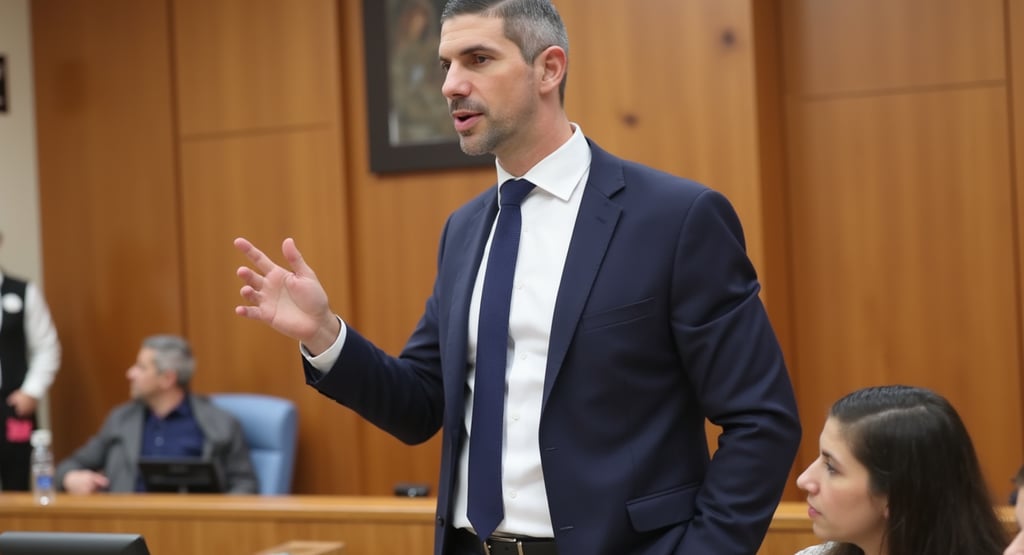
I left the courtroom not because I was afraid of being replaced. I left because I recognized that even "safe" legal jobs are about to get a lot harder for people who don't adapt. When your opposing counsel can produce a 50-page brief with perfect citations in three hours using AI-assisted research, and you're still doing it the old way over three days, guess who has the advantage?
Being the "last to go" isn't the victory some trial lawyers think it is.
The Writing on the Wall
Microsoft's research shows that 40 professions are already highly exposed to AI. But thousands more are in the next wave. Legal work, with its heavy emphasis on research, analysis, and written communication, is sitting right in AI's crosshairs.
You have a choice:
You can be the lawyer who learns to leverage AI as a force multiplier, or you can be the lawyer who gets replaced by someone who did.
The technology isn't waiting for you to get comfortable. Your competitors aren't waiting either.
Want to learn how to use AI for legal research and writing without the hallucination risk? [Find out more in the Blackletter Protocol]
Connect
Reach out for insights or collaboration.
Call
1-888-998-3317
© 2026. All rights reserved.