Most Lawyers Are Using AI Wrong for Trial Prep
Written by Adam Bair. Published 2026-06-16. Trial Practice
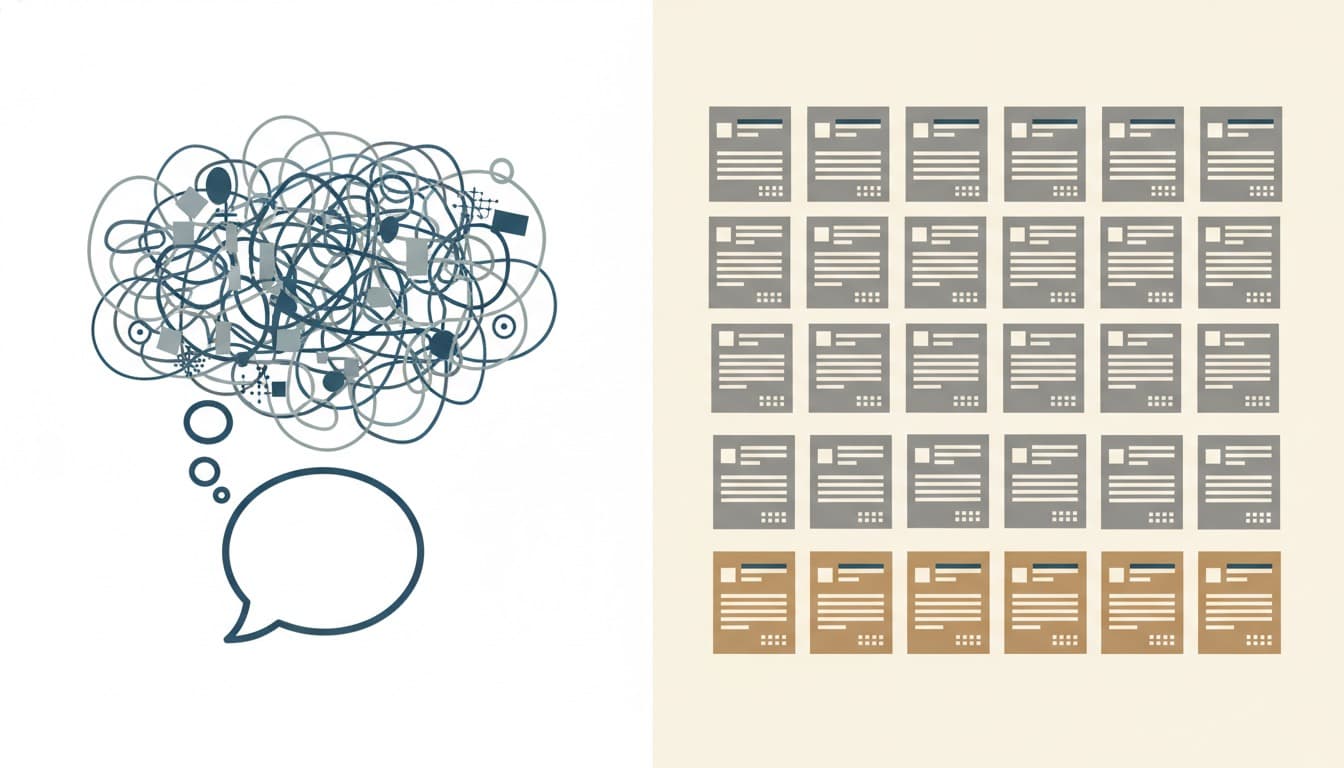
The most common pattern I see when lawyers tell me they tried AI for trial preparation and it did not work runs like this. They opened a chatbot. They typed a question about cross-examination, or about a motion in limine, or about jury selection. The chatbot produced a response. The response read as confident. The lawyer scanned it, found something off, lost trust, and quit.
That is not AI failing at trial prep. That is the wrong setup producing predictable garbage. Trial prep is not a generic task. Generic prompts into a generic tool will not produce trial-ready work.
This article is what I think the right setup looks like, from someone who runs AI tools on legal work every day.
The first mistake: treating the chatbot as a research engine
A general-purpose chatbot is not a research engine. It does not pull cases. It does not Shepardize. It does not know what is good law in your jurisdiction this week. When asked, it will produce something that looks like a citation. The something is sometimes correct, often partially correct, and occasionally a complete fabrication.
The Stanford RegLab studies on legal hallucination put the rate on closed-form legal queries with general-purpose models in the 69 to 88 percent range. Even purpose-built legal AI tools tested in follow-up work hallucinated at rates from roughly 17 to 33 percent. These are research-grade findings. They match what working lawyers see at the desk.
The right move is to stop using AI as a research engine and start using it as a drafting and organizing partner working off materials the lawyer has already verified. That is a different job and the tool does that job well.
The second mistake: no closed universe of materials
The bot will reach for whatever it has. If the lawyer has not given it a constrained set of materials to work from, it will fill in from training data. Training data is not your case file.
A trial workflow that produces useful output runs on a closed set of materials the lawyer has curated. Transcripts. Depositions. Discovery responses. Motions on file. The relevant case law in the jurisdiction, pulled and verified outside the AI. Police reports. Witness statements. The bot's job is to organize, summarize, and draft within that set, not to import outside content.
When the closed-universe constraint is in place, verification becomes a question you can actually answer. Every reference the bot makes either traces back to a document in the set or it does not. If it does not, the reference is wrong and gets stripped.
The third mistake: vague briefs
Lawyers who have managed junior associates know that vague briefs produce vague output. The associate cannot read the senior's mind. The associate produces something in the neighborhood of what was asked, then the senior re-briefs and the associate produces a closer draft.
Same dynamic with AI, more pronounced. The bot will not push back on a vague brief. It will produce something. The something will be off, often in subtle ways the lawyer does not catch on a fast read.
The brief for a trial-prep task should describe the deliverable in enough detail that a thoughtful junior could execute it without further questions. Format. Constraints. Examples. The standard the work has to meet. Vague trial-prep briefs produce trial-prep output that has to be thrown away, which is worse than not using the tool at all.
The fourth mistake: skipping verification
Every output gets reviewed. Every citation gets checked. Every quoted passage gets matched against the underlying document. This is non-negotiable.
The lawyers who get sanctioned for AI-generated content in court are not lawyers whose AI was unusually bad. They are lawyers who skipped the verification step because the output looked plausible. Plausible-looking output is the failure mode AI is best at. The verification step exists precisely because the human cannot tell from reading whether the bot fabricated.
In trial prep specifically, the verification discipline applies to every chapter outline, every impeachment sequence, every cited transcript page. Page 47 of the deposition either supports the question or it does not. If the bot says page 47 supports the question and page 47 does not, the question gets cut.
The fifth mistake: treating the bot as the author
The bot is not the author. The lawyer is the author. The bot is a faster way to produce a first draft of work the lawyer is going to read carefully and revise.
This matters because lawyers who treat the bot as the author tend to ship the bot's work product without revising it. The bot's first draft of a cross-examination chapter is rarely trial-ready. It is reliably better than a blank page. Those are not the same thing. The work between "better than blank page" and "trial-ready" is the lawyer's work, and skipping it produces results that range from embarrassing to sanctionable.
What the right setup looks like
A few specifics on how trial prep runs through AI when it is set up this way.
A custom assistant trained on the methodology I am using, with the methodology written out in long form as a standing instruction document. For cross-examination, the methodology is Pozner-Dodd. For other tasks, other methodologies. The methodology shapes everything the bot produces.
A closed universe of case materials uploaded into the assistant, refreshed when new materials come in. Transcripts the lawyer has read. Documents the lawyer has verified. Cases the lawyer has pulled and confirmed are good law in this jurisdiction.
Specific briefs for specific tasks. Not "help me cross this witness" but "produce a chapter outline for the goal of establishing that the witness had a financial incentive to shade testimony, using the framework from the methodology document, working only from the materials in this project, flagging any chapter step where the materials are thin." That brief produces a useful first draft. The vague version does not.
Close reading of every output. Pen in hand, reading the way I would read a junior's draft. Looking for the things bots get wrong, which overlap heavily with the things juniors get wrong, plus a few specific to bots, like over-confident filler and hallucinated specifics that look real until checked.
Iterative redirection. The first draft is the start of the work, not the end. The bot improves on the second pass when the redirection is specific.
Why most lawyers do not get here
Three reasons.
The first is that the easy way to use a chatbot is to type a question and accept the answer. That is the default that the tool's interface invites. The setup I am describing is more work upfront. The payoff comes after the setup, not in the first hour.
The second is that lawyers who tried AI early, got burned, and quit are now operating from a soured experience. The pattern is well documented in the legal-tech press and on the practitioner forums. The verification tax wiped out the time savings and they retreated to a narrow use case or quit altogether. The structural fix is the closed-universe approach, but you have to be willing to come back to AI to encounter it.
The third is that nobody markets the closed-universe approach loudly because it is not an AI vendor's pitch. The vendors sell broad capability. The working lawyer's reality is that broad capability without the closed-universe constraint produces work product the lawyer cannot trust enough to use.
What changes if you set it up right
The chapter outlines are produced in minutes, not hours. The deposition-stack review is a Q&A session against the materials, not a re-read of 800 pages. The impeachment sequences come back with cross-references the lawyer would not have caught in working memory. The Statement of Facts and the legal arguments come out in drafts that need revision but not redraft.
The lawyer's day gets longer in the parts that require judgment and shorter in the parts that require organizing. That is the right shape. The wrong shape is shorter in the parts that require judgment, which is what happens when the lawyer ships the bot's work without reviewing it.
Frequently Asked Questions
What about AI tools marketed specifically for trial prep?
Some are useful. Most are still general-purpose tools with a legal interface bolted on. The same closed-universe and verification disciplines apply regardless of which tool. The methodology and the materials matter more than the brand of the underlying model.
Do I need to build a custom assistant?
The closed-universe approach works on most platforms that allow project-level material uploads and standing instructions. A custom assistant is not strictly required. A clean project setup with the methodology and materials uploaded works.
How much time does the upfront setup take?
The first methodology document and material upload is a few hours. The assistant gets better over weeks as the standing instructions accumulate fixes for recurring issues.
Is this just for cross-examination?
The same approach works for direct examination prep, deposition outlining, motion drafting, jury-instruction work, and discovery review. The methodology is different for each task; the closed-universe and verification disciplines are the same.
What about ethics rules?
The lawyer's duty of competence applies to AI use the same way it applies to any tool. The Florida Bar Ethics Opinion 24-1 and ABA Formal Opinion 512 both lay out frameworks. Closed-universe workflows make compliance easier because every output traces back to materials the lawyer has reviewed.
Will this work on the morning of trial?
The setup is not a morning-of-trial activity. The setup is a weeks-out activity. By the morning of trial, the assistant is already running on a verified materials set and producing chapter outlines in minutes. That is the whole point.
Written by Adam Bair.
Adam Bair runs a multi-agent AI team applied to legal work, business projects, and teaching others how to use AI. He writes about verification-first AI workflows.
This article is general information about AI in trial practice. It is not legal advice and does not create an attorney-client relationship.