Building a Cross-Examination Bot Without Writing Code
Written by Adam Bair. Published 2026-06-12. Trial Practice
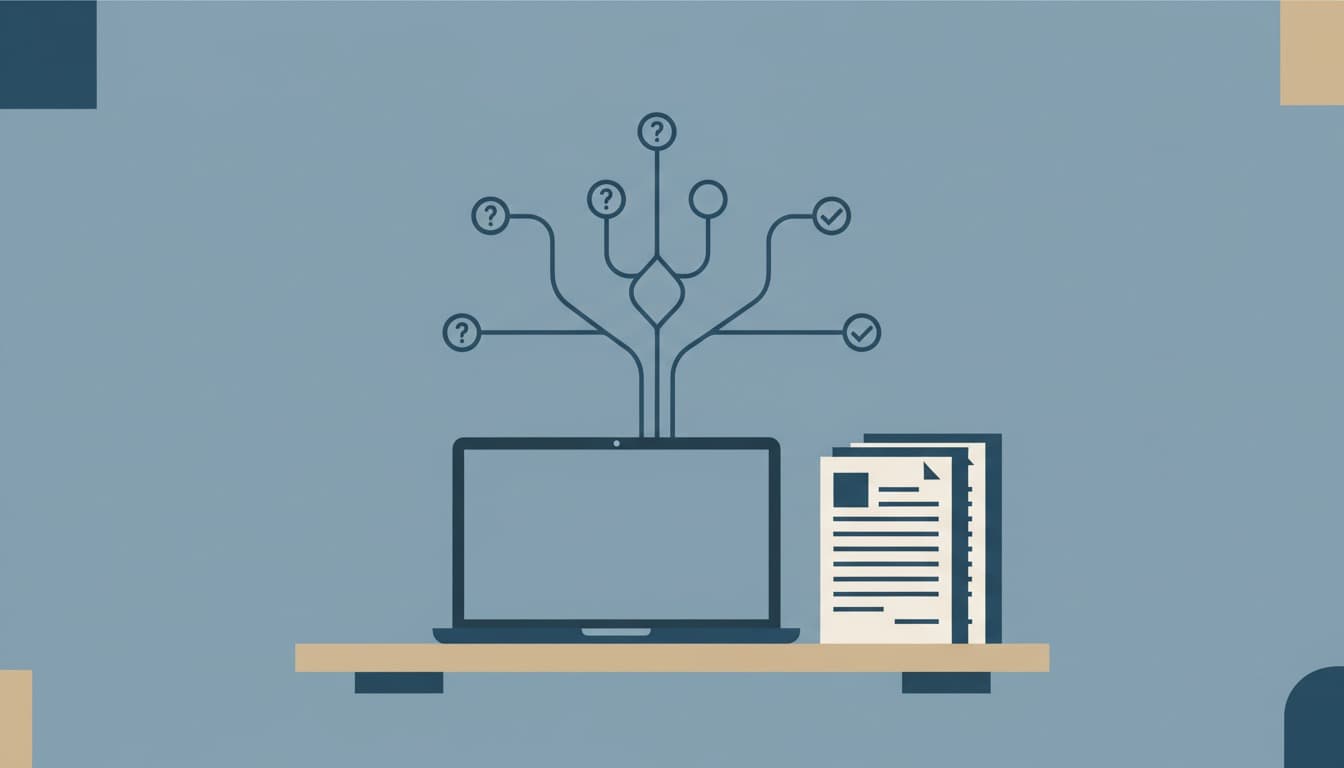
I built an AI cross-examination assistant. I do not write code. I read transcripts and prepare chapters. The bot is simple enough to describe without technical terms, and that is what I want to do here.
The point of writing this is not to advertise the tool. The point is to show lawyers that the build is possible without a computer-science background, and to be honest about what the bot actually does well and where it stops.
What the bot is
It is a custom assistant tied to the Pozner-Dodd cross-examination methodology. It reads witness materials I feed it. It produces chapter outlines, leading-question sequences, and impeachment setups in a format I recognize from the methodology I used in trial. When I redirect it, it adjusts. When new transcripts come in mid-prep, it folds them in.
It is not a research engine. It is not a generic chatbot. It does one job and does it inside a closed set of materials I have curated. That last part is the load-bearing piece.
The mental model
I built the bot the way I would build a process for a careful junior associate. I wrote down what I know about how cross gets prepared. The chapter format. The one-fact-per-question rule. The progression from general to specific. The need to seal off safe havens before driving at the goal. The looping techniques. The way an event gets expanded into micro-events when it carries the theory of the case.
Then I wrote that down again, more specifically. Then I gave the document to the assistant and told it to follow it.
That is not programming. It is briefing. The same skill a senior lawyer uses to brief a first-year is the skill that builds an AI workflow. I did not have to learn a new domain. I had to write the kind of memo I have written a hundred times, but more carefully.
The inputs
The bot runs on materials I supply. Transcripts. Prior statements. Police reports. Depositions. Whatever else I have collected on the witness. The bot does not go fetch documents from the internet. It does not pull cases. It does not opine on facts I have not given it. The closed-universe constraint is not a feature I tacked on; it is the foundation.
This matters for two reasons. First, the work product is grounded in the actual record, not in something the model invented. Second, when I review what came back, I can verify every reference against a document on my desk. If the bot says the witness said X on page 47 of a deposition, page 47 either supports that or it does not. There is no ambiguity.
What the bot does well
It is fast at organizing. A 200-page deposition stack on a witness who has given multiple statements over years can be turned into a chronological set of iterations in minutes. The Dodd crisscross format, where each iteration of a witness's statement on a single event sits next to every other iteration, is something I used to build by hand over hours. The bot drafts the structure; I verify and refine.
It is good at chapter scaffolding. I tell it the goal of a chapter, and it produces a sequence of leading questions that progress from general to specific. The first draft is rarely trial-ready. The first draft is reliably better than a blank page, which is the comparison that matters.
It catches missed parallels. When I am working a juxtaposition chapter, contrasting what the witness admitted in one context with what the witness denied in another, the bot will surface parallels I had not noticed because I did not have the full record in working memory. It does have the full record in working memory, every time.
What stays on the lawyer
Strategy. The choice of which witnesses to cross at all, the choice of which goals to pursue with each, the call on whether a chapter helps the theory of the case or distracts from it, the question of what the jury needs to feel by the time the cross ends. The bot does not see the courtroom. It does not know the judge. It does not know the jury venire. It does not know the theory of the case the way the lawyer knows it.
Tone. Cross is partly about controlling pace and tone in the room. The bot has nothing to say about tone in the room.
Ethics. Cross has limits. There are questions a lawyer cannot ask in good faith, materials a lawyer cannot use, lines that come from training and gut. The bot has no gut. It will produce whatever the brief asked for. The lawyer owns the floor.
Verification. Every cite, every quote, every page reference gets checked against the underlying document before it goes into trial materials. This is the same discipline that prevents AI hallucination problems anywhere else in legal practice. The closed-universe setup makes verification easier. It does not eliminate the need for it.
Why a non-technical lawyer can build this
Two reasons.
The first is that the modern AI tools are not programming environments. They are environments where you write instructions in plain English and the tool follows them. The interface is a text box. The skill is writing clear instructions. Lawyers write clear instructions for a living, when they are doing the job well.
The second is that the methodology comes from the lawyer, not the tool. Pozner and Dodd wrote the methodology. I read the books. I have used the methodology in trial. The bot is a way to apply the methodology faster across more material. The intellectual content is mine. The bot is execution support.
A technical person without trial experience could not have built the same bot, because the bot's value is in how closely it tracks a methodology that takes years to learn well. The technical part is incidental. The legal expertise is the bottleneck.
The setup, in outline
For a lawyer who wants to think about whether to do this, a rough outline of the steps:
Pick the methodology. Cross is not the only candidate. Direct examination prep, deposition outlining, jury-instruction drafting, and discovery review all have established methodologies that map onto the same kind of bot.
Write the methodology down. In your own words, with your own examples. Long form. The document is your asset; the bot is the rendering surface for it.
Curate the materials. Closed universe. Only what you have read and verified.
Brief the assistant. Tell it the methodology, the format, the constraints, the ethical limits. Tell it not to invent. Tell it not to reach for cases it does not have. Tell it to flag when it is uncertain.
Use it. Read every output the way you would read a junior's memo. Redirect. Refine the standing instructions when you find a recurring issue.
That is the whole arc. None of it required a coding skill. All of it required a working lawyer's judgment.
What this is not
It is not a replacement for trial preparation. The lawyer still reads the materials. The lawyer still drafts the cross. The bot accelerates parts of the work; it does not perform the work for you. A lawyer who used the bot's first draft as the trial outline without reading the underlying record would be malpracticing.
It is not a generic AI tip. Generic AI advice is everywhere. This is one specific application of one specific methodology by one builder for one body of work. The transferable lesson is the model, not the tool.
It is not for sale. I built it for my own work. The reason for writing about it is to make the case that other lawyers can build their own versions for their own work.
Frequently Asked Questions
Do I need to know how to code?
No. Modern AI tools take instructions in plain English. The skill that builds the workflow is clear writing, not programming.
Which AI platform do I need?
Several work. The platform matters less than the discipline of running everything through a closed set of materials and verifying outputs against the underlying record.
How long does the build take?
The first usable version is a few hours of work, mostly spent writing the methodology document. The refinement is ongoing; the bot gets better as the standing instructions get sharper.
What about confidentiality?
Client materials only go into systems that meet the appropriate confidentiality standard for the engagement. The technical setup is its own analysis. The methodology of the bot does not relax confidentiality duties.
Can the bot examine a witness in court?
No. The bot prepares materials. The lawyer examines the witness. The work in the courtroom stays on the lawyer.
Is this the same thing as using ChatGPT for cross prep?
No. Generic chat-based use without a closed universe of materials and a methodology produces generic output, often with hallucinated cites or invented facts. The bot's value is the methodology and the closed universe, not the underlying model.
Written by Adam Bair.
Adam Bair runs a multi-agent AI team applied to legal work, business projects, and teaching others how to use AI. He writes about verification-first AI workflows.
This article is general information about a developing area of legal practice. It is not legal advice and does not create an attorney-client relationship.